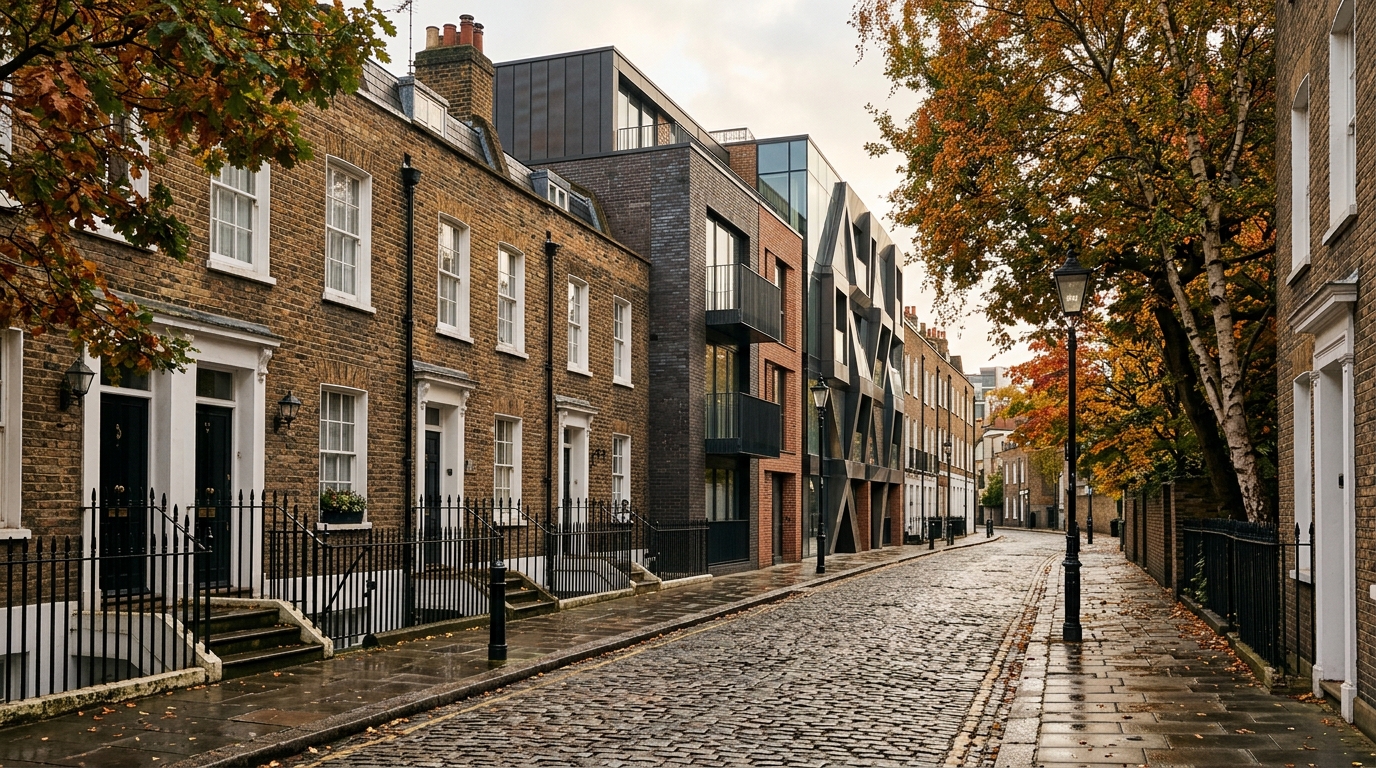
Camden is widely regarded as one of the most challenging planning environments in London. The borough contains more than 4,000 listed buildings, 40 conservation areas covering around a third of the borough's land area, and a planning department with detailed, exacting policies on design quality. Whether you are planning a modest rear extension or a major commercial development, understanding Camden's planning framework in advance of any submission is essential.
Camden's Planning Policy Framework
Planning decisions in Camden are governed by the Camden Local Plan, adopted in 2017 and currently under review, alongside the London Plan and national planning policy. The Local Plan contains policies on housing, design quality, heritage, sustainability, and employment land protection that are more detailed and more prescriptive than the equivalent policies in many other London boroughs.
Camden's Supplementary Planning Documents (SPDs) add further guidance on specific topics, including the Camden Design Guide, which sets out detailed expectations for the design of new buildings and extensions. Applications that do not engage with the Design Guide are routinely refused. Our planning consultant services include a thorough policy review before any application is prepared.
Conservation Areas in Camden
Camden's 40 conservation areas include some of the most intensely studied and carefully managed historic environments in London. Key areas include Hampstead, Belsize Park, Primrose Hill, Bloomsbury, Fitzrovia, Gospel Oak, Adelaide Road, and Keats Grove. Each conservation area has its own character appraisal, which the planning department uses to assess the impact of proposed developments on the area's special character.
Within conservation areas, Permitted Development Rights are substantially reduced. Works that would be permitted development elsewhere, such as rear extensions, roof alterations, and changes to windows and doors, typically require full planning permission in Camden conservation areas. Article 4 Directions are in place across most of the borough's conservation areas to enforce these restrictions.
For guidance on what falls within Permitted Development Rights generally, see our article on Permitted Development Rights in London.
Listed Buildings in Camden
With over 4,000 listed buildings, Camden has a higher concentration of listed structures than almost any other London borough. The borough includes numerous Grade I and Grade II* buildings of exceptional architectural and historic significance alongside the more common Grade II listings. Any works affecting a listed building require Listed Building Consent in addition to any necessary planning permission. For a complete guide to listed building works, see our article on Listed Building Consent in London.
Camden Pre-Application Advice: Is It Worth It?
Camden Council operates a paid pre-application advice service that allows applicants to discuss proposed developments with planning officers before submitting a formal application. For householder applications, the service costs from around 200 pounds. For larger developments, the fee is higher. Pre-application advice is not binding on the council, but it provides valuable insight into the likely issues an application will face and the officer's initial view on design and policy compliance.
For any application involving a listed building, a conservation area, or a site with significant planning history, we recommend engaging the pre-application process. It frequently identifies issues that can be resolved before submission, reducing the risk of refusal and the cost of resubmission. DMC Planning manages the pre-application process on behalf of clients and attends pre-application meetings as the applicant's planning representative.
Design Quality in Camden
Camden's planning committee and officers place significant weight on design quality. Applications for new buildings and extensions are expected to demonstrate a clear understanding of the local context, using materials and massing that respect the character of the surrounding area. Generic or template designs are routinely refused. Camden frequently commissions independent design reviews through the Design Council CABE for significant applications.
DMC Planning has built specific expertise in Camden over many years. We understand what Camden's officers and committee members look for in a successful application, and we design our submissions accordingly. Contact us to discuss your Camden planning project.