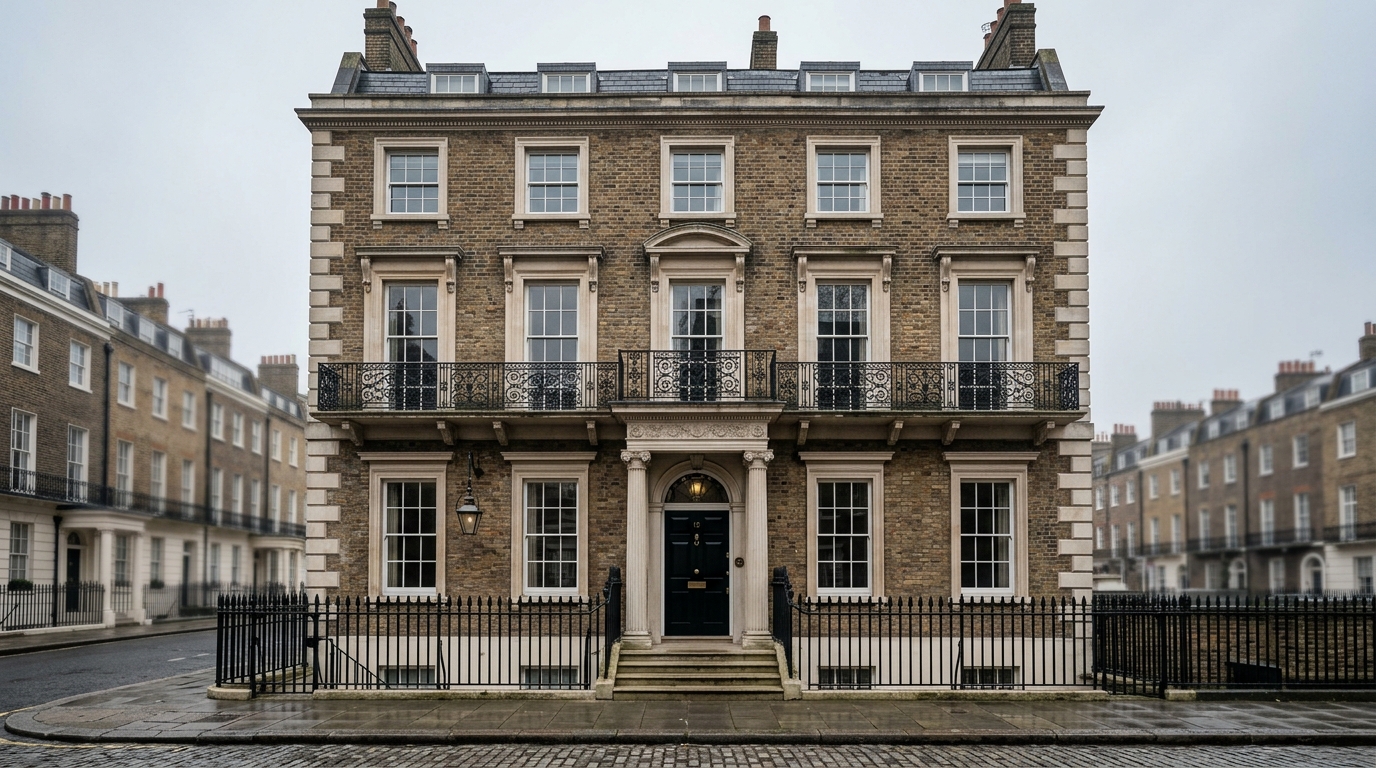
Listed buildings are structures of special architectural or historic interest, protected under the Planning (Listed Buildings and Conservation Areas) Act 1990. In London, there are over 19,000 listed buildings, ranging from terraced Georgian townhouses to Victorian institutional buildings and post-war structures. If you own or plan to work on a listed building, understanding Listed Building Consent (LBC) is essential before any works begin.
The Three Grades of Listing
Listed buildings in England are classified into three grades:
- Grade I: Buildings of exceptional interest. Approximately 2% of all listed buildings. Includes the most significant historic structures such as Buckingham Palace and the Palace of Westminster.
- Grade II*: Particularly important buildings of more than special interest. Around 5 to 6% of all listed buildings.
- Grade II: Nationally important buildings of special interest. Approximately 92% of all listed buildings. The vast majority of listed properties in London fall into this category.
The grade of listing affects the scrutiny applied to any application and the likely conditions imposed on a consent. Grade I and II* buildings attract a statutory requirement for Historic England to be consulted on any application for consent to demolish. Our planning consultants work with all grades of listed buildings across London boroughs.
What Works Require Listed Building Consent?
Listed Building Consent is required for any works that would affect the character of a listed building as a building of special architectural or historic interest. This applies to:
- Internal alterations, including the removal or alteration of original staircases, fireplaces, panelling, and historic joinery
- External alterations, including replacement of windows, doors, render, and roofing materials
- Extensions and additions
- Partial or total demolition
- Installation of new services including heating systems, electrical installations, and air conditioning
- Installation of solar panels on principal elevations
Crucially, the listing protects the entire building, including the interior, regardless of whether internal features are specifically mentioned in the listing description. Works to outbuildings, walls, and other structures within the curtilage of a listed building may also require consent if they form part of the listed curtilage. See our article on air conditioning and planning permission for more detail on one of the most frequently misunderstood areas.
Penalties for Unauthorised Works to Listed Buildings
Carrying out unauthorised works to a listed building is a criminal offence under the 1990 Act. On conviction, the penalties include an unlimited fine and up to 2 years imprisonment. Unlike planning enforcement, there is no time limit on prosecution for listed building offences. This means that unauthorised works carried out 20 or 30 years ago can still be prosecuted today.
If you have purchased a listed building and are concerned about potentially unauthorised alterations carried out by a previous owner, a Certificate of Lawfulness for Existing Works (CLEUD) can provide limited protection. However, the unlawfulness of listed building works cannot be regularised by the passage of time. Contact us to discuss the options available for your specific situation.
Certificate of Lawfulness for Existing Works (CLEUD)
A CLEUD is a formal certificate from the local planning authority confirming that specific works are lawful as a matter of planning law. For listed buildings, a CLEUD can confirm that works carried out before listing, or works that did not affect the character of the building, are lawful. It does not regularise listed building offences, but it can provide useful certainty when purchasing a listed property or when dealing with a planning authority query about historic works.
The Listed Building Consent Application Process
An LBC application is submitted to the local planning authority and must include detailed drawings and a heritage statement explaining how the works preserve the special interest of the building. The standard determination period is 8 weeks, although in practice many authorities take longer for complex applications. For Grade I and II* buildings, Historic England must be consulted and has its own 21-day response period.
A well-prepared heritage statement is critical to the success of an LBC application. It must demonstrate an understanding of the significance of the building, identify the elements that contribute most to its special interest, and explain why the proposed works are the minimum necessary to achieve the applicant's objectives. DMC Planning prepares heritage statements and manages the full LBC application process.
Frequently Asked Questions
Do I need Listed Building Consent for internal decoration?
Routine like-for-like redecoration does not require Listed Building Consent, provided original fabric is not removed or altered. However, stripping historic paint layers, removing original plaster, or replacing decorative cornices and mouldings would require consent. When in doubt, seek pre-application advice from the local planning authority before commencing any works.
Can I fit double glazing to a listed building?
In most cases, replacing original single-glazed sash windows with double glazing requires Listed Building Consent, and consent is often refused on the grounds that it would harm the character of the building. Secondary glazing is usually the preferred solution as it preserves the original windows while improving thermal performance. Some local authorities will consider slim-profile double-glazed units in certain circumstances.
Does listing affect planning permission as well?
Yes. Works to a listed building that also constitute development under the Town and Country Planning Act require both Planning Permission and Listed Building Consent. The two consents are separate and must both be obtained before works commence. Permitted Development Rights are significantly restricted for listed buildings.