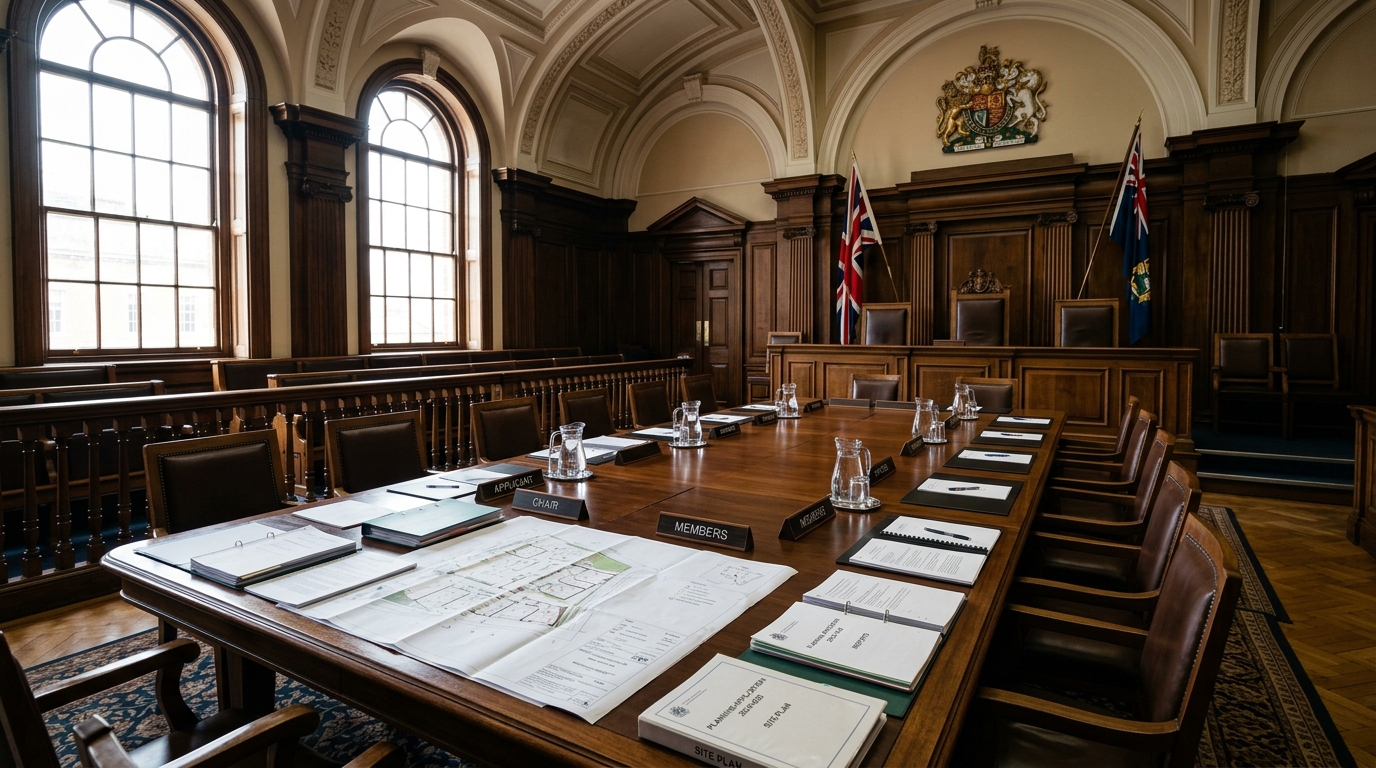
Receiving a planning refusal is not the end of the road. The Town and Country Planning Act 1990 gives applicants the right to appeal a refusal of planning permission to the Planning Inspectorate, an independent government body. Appeals can also be made against conditions attached to a permission, against a failure by the local planning authority to decide an application within the statutory period, and against enforcement notices. This guide explains the process, the three main procedures, timescales, and costs.
The Six-Month Deadline
For most types of appeal, the deadline for lodging an appeal with the Planning Inspectorate is 6 months from the date of the decision notice. For householder appeals, the deadline is 12 weeks. Missing this deadline means the right to appeal is lost permanently. If you have received a refusal and are considering an appeal, contact us as early as possible to preserve your options.
Householder vs Full Planning Appeals
Householder Appeals
Householder appeals cover refused applications for extensions, loft conversions, outbuildings, and other works to an existing dwelling. They are decided on the basis of written representations only, without an Inquiry or Hearing. The Planning Inspectorate aims to decide householder appeals within 8 to 12 weeks of receipt. Third parties (such as neighbours who objected to the original application) may comment on a householder appeal, but their representations carry less weight than in a full appeal. The costs involved in a householder appeal are therefore lower than for more complex case types.
Full Planning Appeals
Full planning appeals cover refused applications for new dwellings, commercial development, change of use, and other non-householder development. They can be decided by written representations, Hearing, or Public Inquiry depending on the complexity and scale of the proposal.
The Three Appeal Procedures
Written Representations
The most common procedure, used for smaller and less complex cases. Both the appellant and the local planning authority submit written statements setting out their cases. An Inspector visits the site and issues a decision, typically within 22 to 26 weeks of the start date. Written representations are suitable for most householder appeals and many minor commercial appeals.
Hearings
A Hearing is a round-table discussion led by an Inspector, used for cases of moderate complexity where an exchange of views is helpful but a full Inquiry is not justified. Hearings typically take half a day to two days. A decision is usually issued within 30 to 36 weeks of the start date. Hearings require thorough preparation of a statement of case and attendance at the Hearing itself.
Public Inquiries
Public Inquiries are the most formal procedure, used for the largest and most complex cases. Evidence is given under oath and witnesses can be cross-examined. Inquiries can last from one day to several weeks for very large schemes. Decisions are typically issued within 36 to 52 weeks. Professional legal and planning representation is essential at a Public Inquiry.
How Much Does a Planning Appeal Cost?
There is no fee payable to the Planning Inspectorate for submitting a planning appeal. However, the preparation of an appeal involves professional time that represents a real cost for applicants.
- Householder appeal: Planning consultant fees typically range from 800 to 2,000 pounds for straightforward cases, depending on the complexity of the refusal reasons and the strength of the case.
- Written representations (full planning): Fees typically range from 2,000 to 6,000 pounds for the planning consultant, plus any specialist inputs such as transport, ecology, or heritage.
- Hearings: Total professional costs including preparation and attendance typically range from 5,000 to 15,000 pounds.
- Public Inquiries: Total costs including planning counsel and consultant fees can range from 20,000 pounds for a straightforward one-day Inquiry to well over 100,000 pounds for a complex multi-week Inquiry.
In some circumstances, an award of costs can be made against either party where they have behaved unreasonably. This can offset some of the professional costs of mounting an appeal where the local planning authority has acted without reasonable planning justification.
What Makes a Successful Appeal?
The strongest appeals are those where the refusal reasons can be clearly demonstrated to be wrong as a matter of planning policy or fact. A refusal based on a misapplication of national policy, an outdated local policy, or where the harm alleged is not supported by evidence is more likely to succeed on appeal than a refusal based on a genuine planning objection with evidential support. DMC Planning only recommends pursuing an appeal where we assess the prospects of success as reasonable. Our overall appeal success rate reflects this selective approach to case selection. Our planning consultant services include a full appeal strategy review before any commitment to proceed.
Frequently Asked Questions
Can I submit a new application instead of appealing?
Yes, and in some cases this is the better approach. Where the refusal reasons relate to design issues that can be resolved by amending the scheme, a revised application is often faster and cheaper than an appeal. DMC Planning will advise on the most cost-effective route to consent following any refusal.
Can my neighbour appeal against a planning permission granted to me?
Third parties such as neighbours do not have a right of appeal against a planning permission granted to someone else under the current English planning system. They can, however, challenge the decision by way of judicial review in the High Court if they believe the decision was made unlawfully. Judicial review has strict time limits and is significantly more costly than a planning appeal.
What happens if I lose the appeal?
If an appeal is dismissed, the applicant has the option of submitting a further planning application, which may or may not succeed depending on whether the issues raised by the Inspector can be addressed. An alternative route is to apply for planning permission for a modified scheme that addresses the Inspector's concerns. In some cases, a second appeal is appropriate where new evidence or a change in policy provides grounds to revisit the decision.